
Welcome to Absolute Self Care’s August Wrap-Up! We’ll use this space at the end of every month to catch you up on everything we published. That way, you never have to dig through the archive to find something you missed. If you follow along post by post, consider this a refresher. If you’re catching up all at once, consider it your shortcut.
Reapplication: How to Keep Your SPF Protection All Day
First up in Self-Care Recap #01: sunscreen. It wears off faster than most people assume, and that was the entire premise of this post. UV filters degrade under sunlight. The protective layer you applied at 7 a.m. is measurably weaker by 9 a.m., even though you can’t feel or see the difference. A study in the Journal of the American Academy of Dermatology found something striking. Reapplying sunscreen just 20 minutes into sun exposure cuts UV exposure by 60 to 85%, compared with waiting the standard two hours. Despite that, an AAD survey found 65% of people admit they often forget to reapply at all.
Makeup was the real culprit behind most of that gap. Swiping a thick cream sunscreen over a finished face feels like it will undo the whole look, so people skip the step. The fix isn’t willpower, it’s the right format. Powder sunscreens and lightweight SPF mists can be tapped or pressed over makeup instead of rubbed in. There was also a less obvious finding in the research. Most people apply only a quarter to half of the sunscreen used in official SPF testing. That’s just their first coat. An SPF 50 applied too thinly can perform closer to an SPF 7.
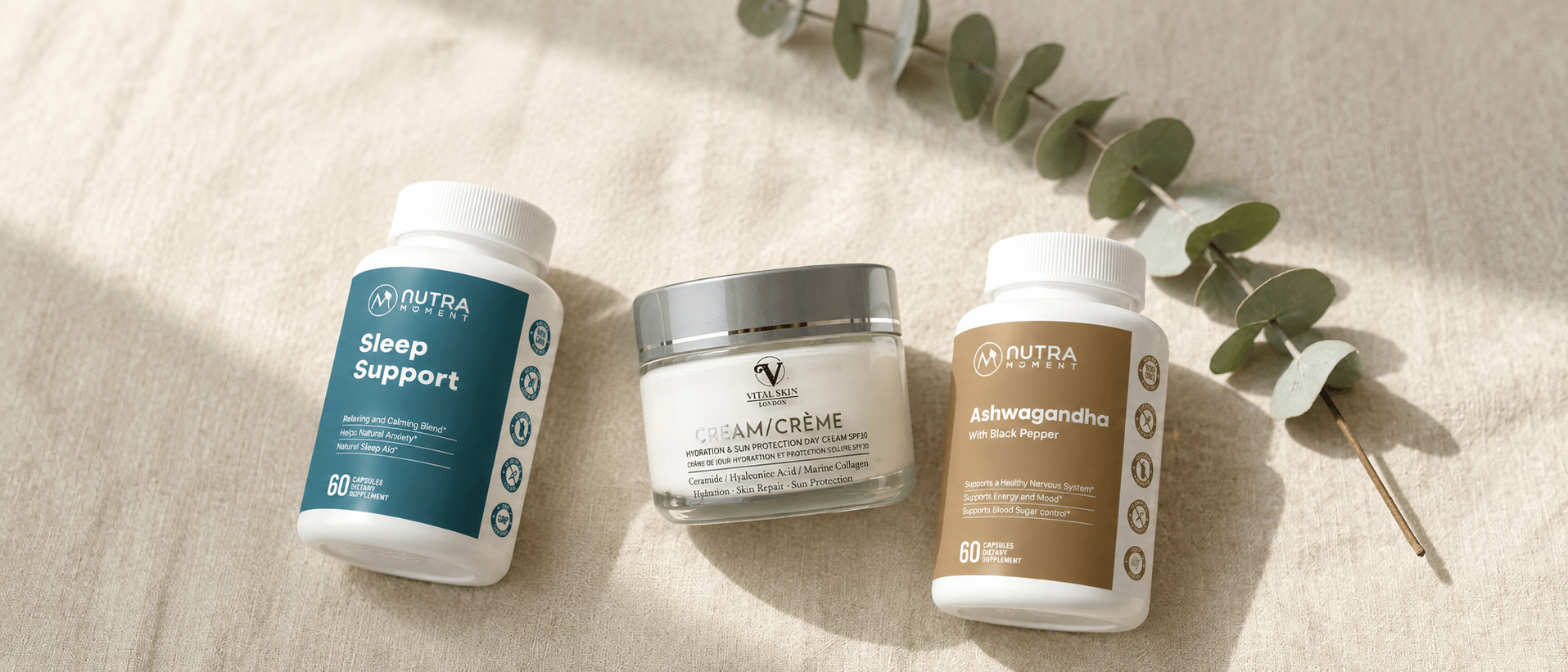
Our Hydration & Sun Protection Day Cream SPF 30 was built with this exact problem in mind. It absorbs quickly and sits comfortably under foundation, so a midday touch-up doesn’t feel like starting your routine over.
Read the full post: “Reapplication: How to Keep Your SPF Protection All Day”
Mushroom, The Adaptogen Backed by Real Research
Functional mushrooms have gone from a health-food-store curiosity to a $13 billion global market. This post dug into why the science has finally caught up with the hype. Not every variety does the same job, which most coverage of this trend glosses over.
Lion’s Mane targets mental clarity. A randomized, double-blind study found participants performed measurably faster on cognitive tasks just 60 minutes after a single dose. Reishi works differently. It leans on its effect on cortisol to promote a calmer state, which is why it’s usually taken in the evening. Cordyceps targets oxygen utilization instead. One three-week clinical trial found an 11% improvement in VO2 max among participants. That makes it the pick for sustained energy without a caffeine crash.
None of this works overnight, and the post was upfront about that. A systematic review of randomized controlled trials confirmed real immunological effects from fungal beta-glucans, the active compounds behind these mushrooms. The pattern is consistent: benefits build over two to four weeks, not a single dose. Sourcing matters too. Fruiting-body extracts contain higher concentrations of active compounds than mycelium-on-grain products.
Rather than asking you to juggle three bottles, our Natural Super Mushroom Supplement blends all three varieties into one daily capsule.
Read the full post: “Mushroom: The Adaptogen Backed by Real Research”
The Overnight Secret to Repaired, Glowing Skin
This was arguably the most surprising post of the month, since sleep rarely gets treated as a skincare ingredient. Nearly a third of American adults regularly get less than seven hours a night. Poor sleepers show almost twice the visible signs of aging compared to people who rest well. The mechanism is straightforward once you see it. During deep, slow-wave rest, your pituitary gland releases growth hormone. That hormone signals the fibroblasts that produce collagen and elastin. Cut that window short, and you cut the repair process short with it.
Cortisol makes things more complicated than “go to bed earlier.” Short or disrupted sleep raises cortisol. Elevated cortisol suppresses fibroblast activity while also breaking down collagen you already have. That’s a two-directional hit. Adaptogens like ashwagandha can lower cortisol by up to 30% in some studies. Magnesium has become one of the most researched minerals for sleep support, too. A randomized, placebo-controlled trial found magnesium bisglycinate significantly reduced insomnia severity scores in just four weeks.
Our Natural Sleep Support Supplement combines magnesium with calming botanicals to target that stress response directly. That’s the last of the three posts in Self-Care Recap #01. The post also suggested pairing the supplement with Grass-Fed Collagen Peptides for a more complete approach. One addresses the repair window. The other supplies the raw materials your skin needs once that window opens.
Read the full post: “Sleep: The Overnight Secret to Repaired, Glowing Skin”
If there’s a common thread across all three posts, it’s this: consistency beats any single product. That’s true whether you’re reapplying sunscreen on a schedule, taking a mushroom supplement daily, or finally protecting your sleep. None of this requires an overhaul. It just requires picking one habit and sticking with it through a full cycle before judging whether it’s working.
We’ve got more research-backed posts already in the works for next month. Keep an eye out for next month’s wrap-up. In the meantime, if anything we’ve covered sounds like it fills a gap in your routine, the shop is a good place to start.