
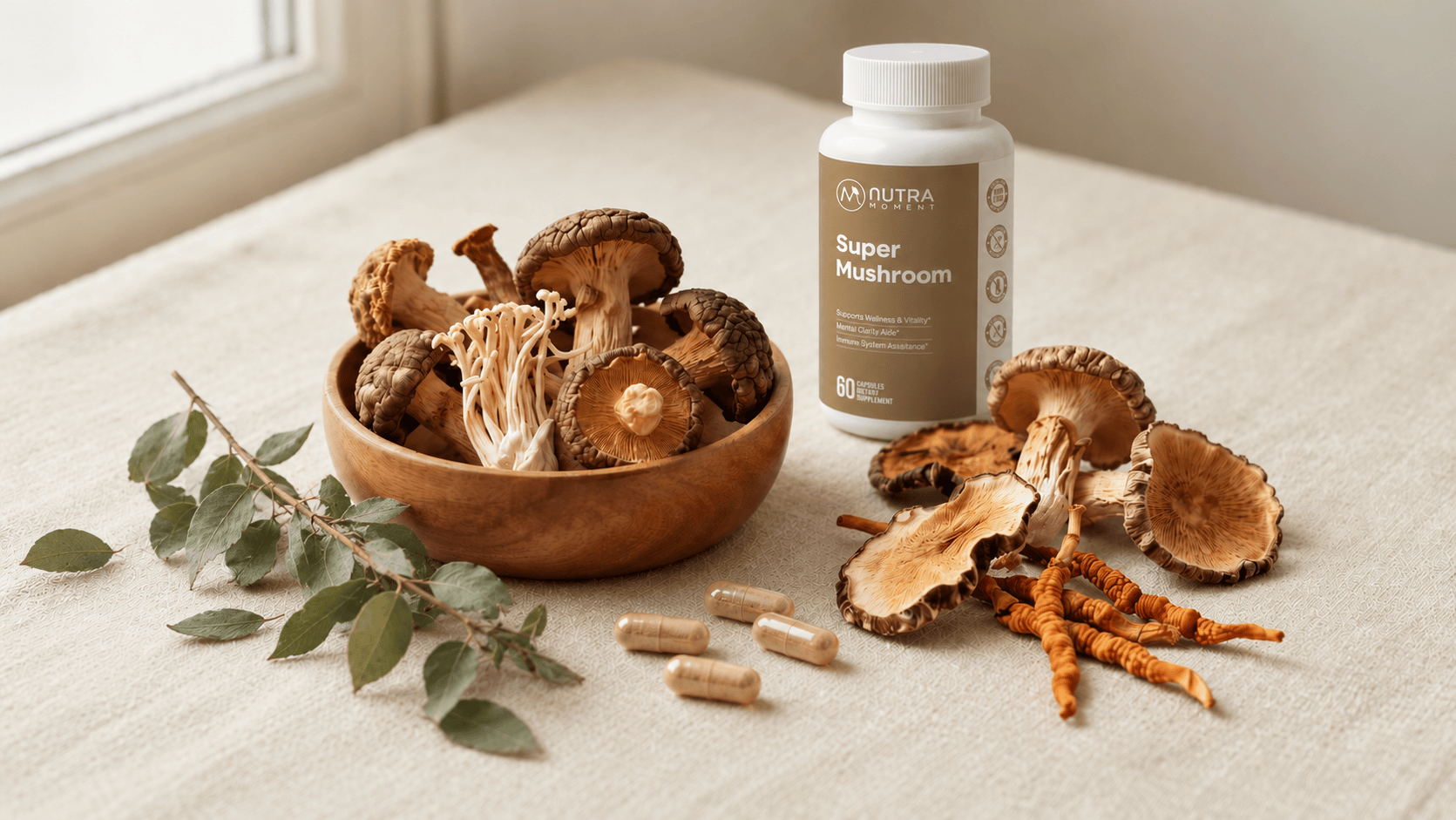
You’ve probably noticed the mushroom trend popping up everywhere lately, from your coffee shop’s menu to your favorite wellness influencer’s morning routine. This isn’t just a passing fad, however. The global functional supplement market built around this humble fungus is valued at over $13 billion in 2026 and growing at nearly 10% a year, driven by people who want stress relief, sharper focus, and a stronger immune system without synthetic stimulants.
That said, not all of these supplements are created equal, and not all of them do the same job. Lion’s mane, reishi, and cordyceps each target a different part of your day. Understanding which one does what is, therefore, the difference between something that actually works for you and one that just sits in your cabinet.
In this guide, you’ll learn what the current clinical research actually says, how each variety differs, and how to choose one that matches your specific goals. As a result, you’ll be able to skip the guesswork that trips up most first-time buyers.
Why This Wellness Trend Is Having a Moment
Functional fungi aren’t new. Cultures across Asia have used them medicinally for centuries. What’s changed is the science finally catching up to the tradition. In fact, 2025 and 2026 saw the most active period of human clinical research on these ingredients to date, including multiple randomized, placebo-controlled trials.
Consumer spending on immune-support supplements grew 18.2% year-over-year in 2026, outpacing the broader supplement category overall. As a result, brands are moving away from vague “wellness” claims and toward specific, research-backed outcomes. That shift matters because it means you can now match your choice to an actual goal instead of guessing.
Additionally, the appeal of an adaptogen that doesn’t come with a caffeine crash or dependency risk has pulled in a new wave of people who tried other stimulants and found them lacking. These blends offer a gentler, more sustained kind of support. On top of that, they fit easily into an existing routine, whether that’s your morning coffee, a smoothie, or a simple capsule.
Ultimately, this is why the category has moved from niche health food stores into mainstream wellness cabinets. The demand isn’t going away anytime soon, and neither is the research supporting it.
Lion’s Mane: The Focus Variety
If mental clarity is your goal, Lion’s Mane is the variety with the strongest evidence behind it. A randomized, double-blind study found that participants performed measurably faster on cognitive tasks just 60 minutes after a single dose. That’s a fast enough response that you can actually feel it working.
Beyond the short-term effect, 28 days of consistent supplementation showed a trend toward reduced subjective stress in the same study population. Researchers believe this comes from lion’s mane’s unique ability to stimulate nerve growth factor, or NGF, a protein tied to brain cell health and repair. No other commonly available variety has this specific mechanism backed by clinical trials.
For this reason, lion’s mane tends to work best earlier in the day, when you need to think clearly rather than wind down. Many people pair it with their morning coffee or take it as a standalone capsule right after breakfast.
Because the effect builds gradually, it’s worth tracking your own response over a few weeks rather than judging it after a single dose. Some people notice subtle improvements in word recall or task-switching before anything more dramatic shows up.
Reishi: The Calm-and-Recovery Variety
Reishi has earned the nickname “the fungus of immortality,” and while that’s marketing flourish, the underlying science is real. This variety is rich in beta-glucans, polysaccharides, and triterpenes, compounds that help modulate immune function and support the body’s natural stress response.
Unlike lion’s mane, reishi’s strength lies in its GABAergic activity and its effect on cortisol, your primary stress hormone. Because of this, reishi tends to promote a calmer, more grounded state rather than sharper focus. Many people take it in the evening as part of a wind-down routine instead of a morning stack.
Ongoing research is also exploring reishi’s connection to the gut-brain axis, an area that could explain why so many users report improvements in both mood and digestion. However, this research is still developing, so it’s worth treating those reports as promising rather than proven.
That said, reishi’s long history of traditional use combined with its emerging clinical support makes it one of the more well-rounded options available. It’s often the first variety people reach for when stress, rather than focus, is the primary concern.
Cordyceps: The Energy-and-Performance Variety
Cordyceps takes a different approach entirely. Rather than targeting the brain, it works on oxygen utilization in the body. One three-week clinical trial found a measurable 11% improvement in VO2 max, a key marker of aerobic performance, among study participants.
This makes cordyceps a popular choice for people who are active or simply want more sustained energy without the jitters of caffeine. On top of that, some research suggests it also helps reduce stress and promote relaxation, giving it a secondary benefit beyond pure performance.
Because its effects are tied to physical output, cordyceps is often best taken earlier in the day, ideally before exercise or any period requiring sustained energy. Athletes and casual gym-goers alike have gravitated toward it for exactly this reason.
Unlike lion’s mane and reishi, cordyceps doesn’t have a strong calming or cognitive signature. Instead, think of it as the variety you reach for when your goal is stamina rather than stillness or sharpness.
“But Do These Supplements Actually Work?”
It’s a fair question, and a common one. Skepticism around adaptogens is understandable given how loosely the word “wellness” gets used in marketing. Here’s the thing, though: unlike many trendy ingredients, functional mushroom supplements now have a real, growing body of clinical evidence behind them.
A systematic review of 62 published studies confirmed that oral fungal beta-glucans, the active compounds in reishi and other varieties, produced significant immunological effects across multiple formulations and delivery methods. That’s not a single small study. Rather, that’s a pattern repeated across dozens of independent trials.
Naturally, results vary by individual, dose, and consistency of use. Most research points to effects building over several weeks rather than overnight, so patience matters just as much as the supplement itself. In other words, this category works more like a long-term investment in your baseline than a quick fix.
For comparison, think of it less like a painkiller and more like a multivitamin: subtle, cumulative, and easy to underestimate if you’re only looking for an immediate effect. That’s precisely why consistency, not intensity, is the real driver of results.
How to Choose and Use a Supplement Like This Safely
Not every product on the shelf delivers what it promises. Quality varies enormously, and that variability is exactly why standardization and sourcing matter so much. Look for products that specify extract concentration, are third-party tested, and disclose the exact fungal species used.
Most studies suggest a daily intake starting around 500mg to see noticeable effects, though the right amount depends on the specific variety and your personal response. Starting with a lower dose and adjusting gradually is, therefore, a smart, low-risk approach for most people.
As with any supplement, side effects are generally mild but can include digestive upset or headache in sensitive individuals. If you’re pregnant, breastfeeding, or scheduled for surgery, talk to your healthcare provider before adding a mushroom supplement to your routine.
Additionally, sourcing matters more than most people realize. Fruiting-body extracts tend to contain higher concentrations of active beta-glucans than mycelium-on-grain products, so checking the label for this distinction is worth the extra thirty seconds.
Meet Your Daily Mushroom Ally
This is exactly where Absolute Self-Care’s [INTERNAL LINK: Natural Super Mushroom Supplement — product page] comes in. Instead of asking you to juggle three different bottles and guess at your dosing, it’s formulated to deliver a balanced blend that supports focus, stress resilience, and immune health in one daily capsule.
The formula draws on the same categories of research-backed compounds discussed above: beta-glucans, polysaccharides, and standardized extracts, rather than filler-heavy blends with unclear potency. For anyone who wants to try this trend without becoming a full-time supplement researcher, this is the simplest way to start.
Because it combines multiple varieties in one formula, you also avoid the common mistake of picking just one and missing out on the others’ benefits. As a result, you get broader coverage across focus, calm, and immune support all at once.
Pair it with Absolute Self-Care’s [INTERNAL LINK: Natural Ashwagandha Pepper Supplement — product page] for a more complete adaptogen routine, especially if stress management is your primary goal. Together, the two formulas cover both the fungal and herbal sides of the adaptogen category.
Frequently Asked Questions
What is the best mushroom supplement for beginners?
A blended formula that includes lion’s mane, reishi, and cordyceps gives you broad coverage without needing to research each variety individually. Single-ingredient supplements, on the other hand, are better once you know exactly which benefit you’re targeting.
How long does it take for mushroom supplements to work?
Most clinical studies show measurable effects after 2 to 4 weeks of consistent daily use, though some, like lion’s mane, show short-term cognitive effects within an hour of a single dose. Ultimately, consistency matters more than any single serving.
Can I take mushroom supplements every day?
Yes, most formulas in this category are designed for daily use, and research studies typically test them over weeks or months of continuous supplementation. As always, check with a healthcare provider first if you have existing health conditions.
Do mushroom supplements interact with medications?
They can, particularly with immune-modulating or blood-thinning medications. Because of this, it’s important to review your current medications with a doctor or pharmacist before starting a new mushroom supplement.
What’s the difference between mushroom coffee and a standalone supplement?
Mushroom coffee blends extract with caffeine, which can mask or complicate the fungus’s own effects. A standalone capsule, however, lets you isolate and track those benefits without caffeine’s influence.
Are mushroom supplements safe for daily long-term use?
Normal doses of adaptogenic varieties are generally considered safe in food and supplement form for most healthy adults. That said, quality and sourcing matter, so choosing third-party tested products reduces your risk significantly.
Can I take multiple mushroom varieties at the same time?
Yes, and many people do. Lion’s mane in the morning paired with reishi in the evening is a common combination, since the two work on different systems and don’t compete with each other.
The Bottom Line
This wellness trend isn’t hype dressed up as science anymore. Lion’s mane, reishi, and cordyceps each offer distinct, research-supported benefits, whether you’re after focus, calm, or physical performance. The key is matching the right variety to your actual goal and giving it a few consistent weeks to work.
Ultimately, the research is clear that consistency beats intensity here. A daily habit, built around a well-sourced mushroom supplement, will do more for your stress levels, focus, and immunity than sporadic use of a stronger dose ever could.
If you’re ready to explore what a well-formulated supplement can do for you, Absolute Self-Care’s Natural Super Mushroom Supplement is a simple, research-informed place to start.
Sources
- The Acute and Chronic Effects of Lion’s Mane Mushroom Supplementation on Cognitive Function, Stress and Mood in Young Adults
- Adaptogenic Effects of Mushroom Blend Supplementation on Stress, Fatigue, and Sleep: A Randomised, Double-Blind, Placebo-Controlled Trial
- Acute Effects of Naturally Occurring Guayusa Tea and Nordic Lion’s Mane Extracts on Cognitive Performance
- NIH/PubMed: Functional Mushroom Bioactive Compound Study
- NCBI: Beta-Glucan Immunological Effects Systematic Review