
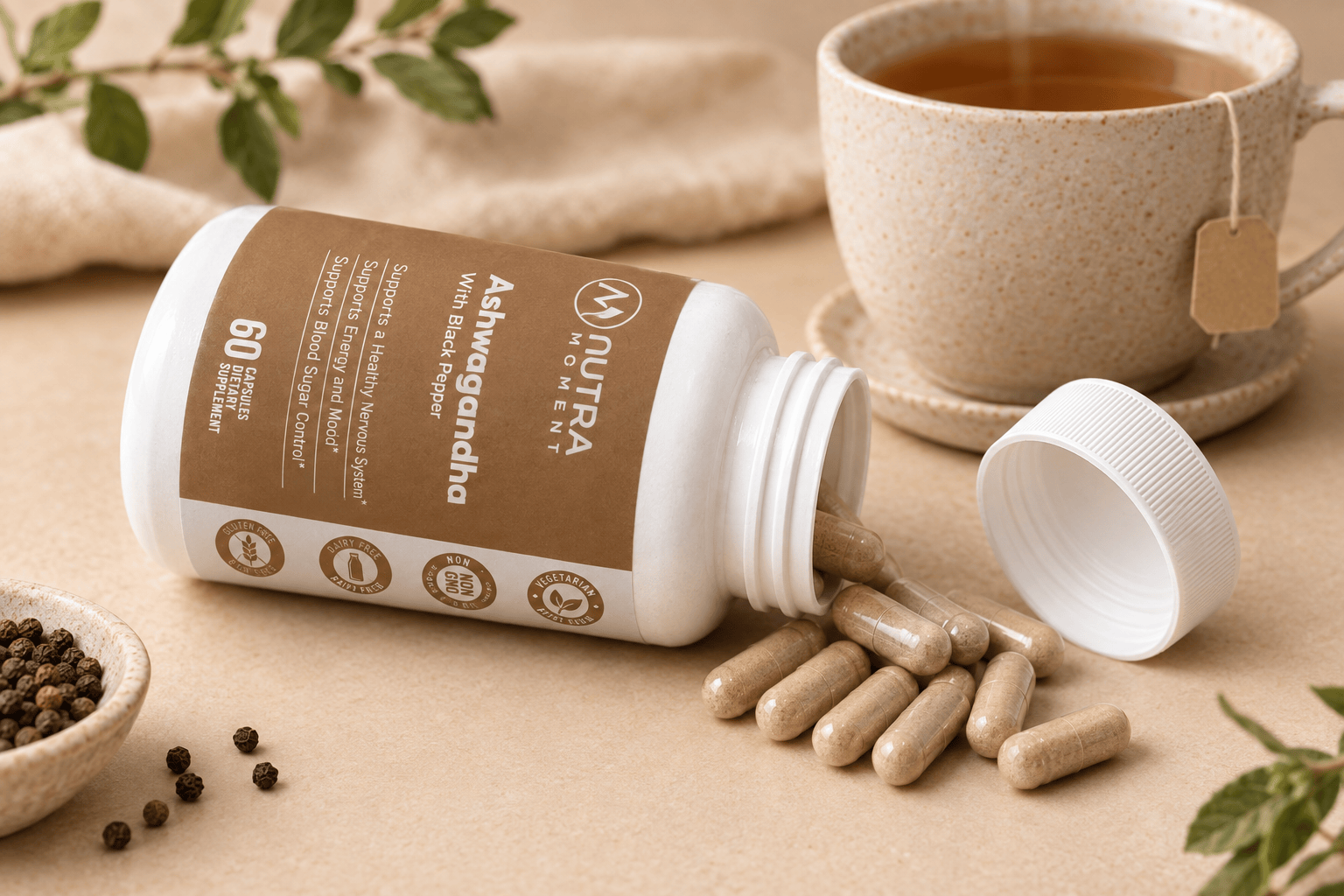
Ashwagandha has quietly become one of the most talked-about herbs in modern wellness. The clinical research is finally catching up to the hype. One systematic review found cortisol reductions of nearly 28 percent in adults who took it consistently for 60 days. That is a striking number for a plant extract. It explains why ashwagandha keeps showing up in stress-support routines, from Ayurvedic clinics to mainstream wellness brands. Maybe your days feel like a constant low hum of tension, a background stress you cannot quite name. If so, this adaptogen is worth understanding before you decide whether it belongs in your routine.
Why Chronic Stress Is So Hard to Shake
Stress itself is not the problem. The body handles short bursts of stress quite well. The real issue is chronic, low-grade stress that never fully resolves. It comes from packed schedules, constant notifications, and days that rarely include real recovery time.
When stress becomes constant, the hypothalamic-pituitary-adrenal axis, or HPA axis, stays activated far longer than it should. This system releases cortisol, and continuous activation was never part of its design. As a result, prolonged activation disrupts sleep, drives stubborn weight gain around the midsection, and weakens immune response. Over time, it can also blunt motivation and make ordinary tasks feel disproportionately heavy.
Because this pattern builds gradually, most people do not notice it until symptoms pile up. Fatigue that coffee cannot fix, irritability over small things, and a sense of being wired but exhausted are all common signs. Addressing the root cause works far better than chasing individual symptoms. That is the gap adaptogens like ashwagandha fill: they target the stress response system itself, not just one symptom.
The Science Behind Ashwagandha as an Adaptogen
Ashwagandha belongs to a category of herbs called adaptogens. Researchers believe these plants help the body resist and recover from stress, rather than targeting one specific symptom. Its active compounds, called withanolides, appear to work through two main pathways.
The first is direct regulation of the HPA axis, which helps bring an overactive cortisol response back toward baseline. The second involves modulating GABA, a calming neurotransmitter in the central nervous system. Because these two pathways work together, ashwagandha tends to produce a steadier mood and easier winding down, rather than sedation. In other words, it works with your existing stress response instead of shutting it off entirely.
Research backs this up more consistently than it does for most herbal supplements. A meta-analysis of 15 randomized controlled trials looked at this question directly. Participants taking ashwagandha showed significantly greater reductions in morning cortisol than those taking a placebo. That said, individual results vary. Most studies also used consistent daily dosing rather than occasional use. That is an important distinction from supplements you only take when you remember to.
Ashwagandha Compared With Other Stress Supplements
Ashwagandha is far from the only ingredient companies market for stress relief, so it helps to see where it fits. People often recommend magnesium for relaxation and sleep, but its evidence is more mixed. That is particularly true for people who are not already deficient. L-theanine, an amino acid in tea, promotes calm alertness rather than addressing cortisol directly.
This particular herb stands out because its research base specifically targets the stress hormone pathway, rather than general relaxation. That does not make it superior for every person or every goal. However, for someone whose main complaint is a persistently elevated stress response, the cortisol-focused evidence matters most. It gives ashwagandha a more direct mechanism than many of its adaptogen peers. Pairing it with good sleep habits and regular movement tends to produce better results than relying on any single intervention alone.
How Long It Takes to Feel a Difference
Unlike a fast-acting remedy, ashwagandha behaves more like a tonic. Most clinical trials measured benefits after two to four weeks of daily use, not after a single dose. That is an important expectation to set. People who try it once and stop are unlikely to notice much of anything.
Consistency matters more than timing of day. That said, many people prefer taking it in the evening, since it can have a mildly calming effect. A typical clinically studied dose ranges from 250 to 600 milligrams daily, usually with food to minimize stomach sensitivity. Everyone’s baseline stress and tolerance differ. Starting at the lower end of that range is a reasonable way to gauge your own response before increasing it.
Sleep quality is one of the more consistently reported secondary benefits. Several studies note improved sleep onset and fewer nighttime awakenings among participants taking ashwagandha. This is likely a downstream effect of lower evening cortisol, rather than a direct sedative action. Someone whose sleep struggles are stress-driven, therefore, may notice improvement here even before they notice a change in daytime mood.
What to Look for in a Quality Extract
Ashwagandha supplements vary widely in quality, which is why a lot of people get inconsistent results. Most clinical trials tested root-only extracts with a set withanolide content. That is why a supplement’s label matters more than the marketing on the bottle.
Look for a stated withanolide percentage, ideally in the 1.5 to 5 percent range. This tells you the maker standardized the extract rather than diluting it. Pairing ashwagandha with black pepper extract, sometimes listed as piperine, is another meaningful detail. Research shows piperine improves the absorption of many plant compounds. That means a well-formulated combination product may deliver more usable ashwagandha than a plain capsule of the same dose.
Potency varies so much between brands that two products listing the same milligram amount are not necessarily equivalent. This is one of the more overlooked reasons people try ashwagandha, feel nothing, and give up. They quit before the two-to-four-week window is even over.
“Herbal Supplements Never Actually Work”
This is a fair skepticism, since the supplement industry is full of unproven claims. However, ashwagandha is a genuine exception. Few herbal ingredients have this much randomized, placebo-controlled research behind them. Multiple independent studies have replicated the cortisol-lowering effect, rather than relying on a single small trial. That level of replication is rare in the supplement world, which is part of why researchers keep returning to it.
“I Don’t Have Time to Add Another Wellness Ritual”
Fitting ashwagandha into a routine is simpler than most stress-management advice. It does not require a dedicated block of time, a class, or an app. Taking one capsule with a meal you already eat is typically enough. That makes it one of the lower-effort additions for people whose schedules are already full. Because it pairs with an existing habit rather than creating a new one, it is easy to keep up. That makes it simpler than adding a meditation practice or gym routine to an already full day.
Making Ashwagandha Part of Your Routine
Once you understand what chronic stress is doing to your cortisol pattern, the next step is choosing a consistent, quality source. The Natural Ashwagandha Pepper Supplement from Absolute Self Care pairs ashwagandha root extract with black pepper. This combination supports absorption, so your body can use more of the active withanolides.
Because the formula is straightforward, it fits easily into an existing supplement routine without adding complexity. Taking it at the same time daily, alongside a meal, is the simplest way to build the habit. That consistency carries you through the two-to-four-week window where most people start noticing a difference. [INTERNAL LINK: Natural Ashwagandha Pepper Supplement product page]
Think of it as one small, repeatable input, not another item on an already long wellness checklist. The research shows that consistency, not intensity, actually moves cortisol.
If sleep disruption is part of what stress costs you, it is worth a look. A consistent nightly wind-down routine supports the same underlying system. [INTERNAL LINK: related blog post on sleep hygiene]
Frequently Asked Questions
How long does it take for ashwagandha to reduce stress?
Most clinical studies measured meaningful improvements after two to four weeks of consistent daily use. Individual timelines vary, but noticeable changes rarely show up before that window, so patience during the first few weeks matters.
Is ashwagandha safe to take every day?
Most healthy adults tolerate daily use well within studied dosage ranges. That said, people with thyroid conditions or autoimmune disorders, and anyone who is pregnant, should check with a doctor first. Ashwagandha can influence thyroid hormone levels.
Can ashwagandha help with anxiety, not just stress?
Yes. Several randomized, placebo-controlled trials have found reductions in both stress and anxiety scores among participants taking ashwagandha. This effect likely comes from ashwagandha’s influence on cortisol and GABA activity.
What is the best time of day to take ashwagandha?
There is no strict rule, but many people prefer taking it in the evening because of its mildly calming effect. Consistency in timing matters more than the specific hour you choose.
Does ashwagandha interact with medications?
It can interact with thyroid medications, sedatives, and immunosuppressants, among others. Anyone taking prescription medication should talk to a healthcare provider before adding ashwagandha to their routine.
Will ashwagandha make me drowsy during the day?
Typically not at studied doses. Most people describe its effect as calming rather than sedating. Individual sensitivity varies, though, so it is reasonable to gauge your own response before taking it earlier in the day.
Does ashwagandha work the same for everyone?
Not exactly. Response varies with baseline stress levels, consistency of use, and individual physiology. That is why clinical trials report average improvements across groups, rather than guaranteed results for every person.
The Bottom Line
Chronic stress rarely resolves on its own. Cortisol that stays elevated for too long affects far more than your mood. It touches sleep, energy, and long-term health. Ashwagandha is one of the few herbal adaptogens with strong clinical evidence behind it. It stands out particularly for lowering cortisol and easing the day-to-day weight of stress.
The research points so consistently toward the same mechanism. That makes ashwagandha one of the rare cases where wellness hype and clinical data actually line up. Give it a real trial of two to four weeks before judging whether it works. This is not a same-day fix.
If you are ready to start, the Natural Ashwagandha Pepper Supplement is a straightforward option. It brings clinically studied support into a routine you already have.
Sources
- NIH Office of Dietary Supplements: Ashwagandha Fact Sheet
- PMC: Effects of Ashwagandha Supplements on Cortisol, Stress, and Anxiety Levels — Systematic Review and Meta-Analysis
- PMC: Adaptogenic and Anxiolytic Effects of Ashwagandha Root Extract in Healthy Adults
- PMC: Investigation into the Stress-Relieving Actions of Ashwagandha Extract
- Mayo Clinic Press: What to Know About Adaptogens
- Springer Nature: Ashwagandha Formulation Alleviates Stress and Anxiety Symptoms While Improving Sleep Quality