
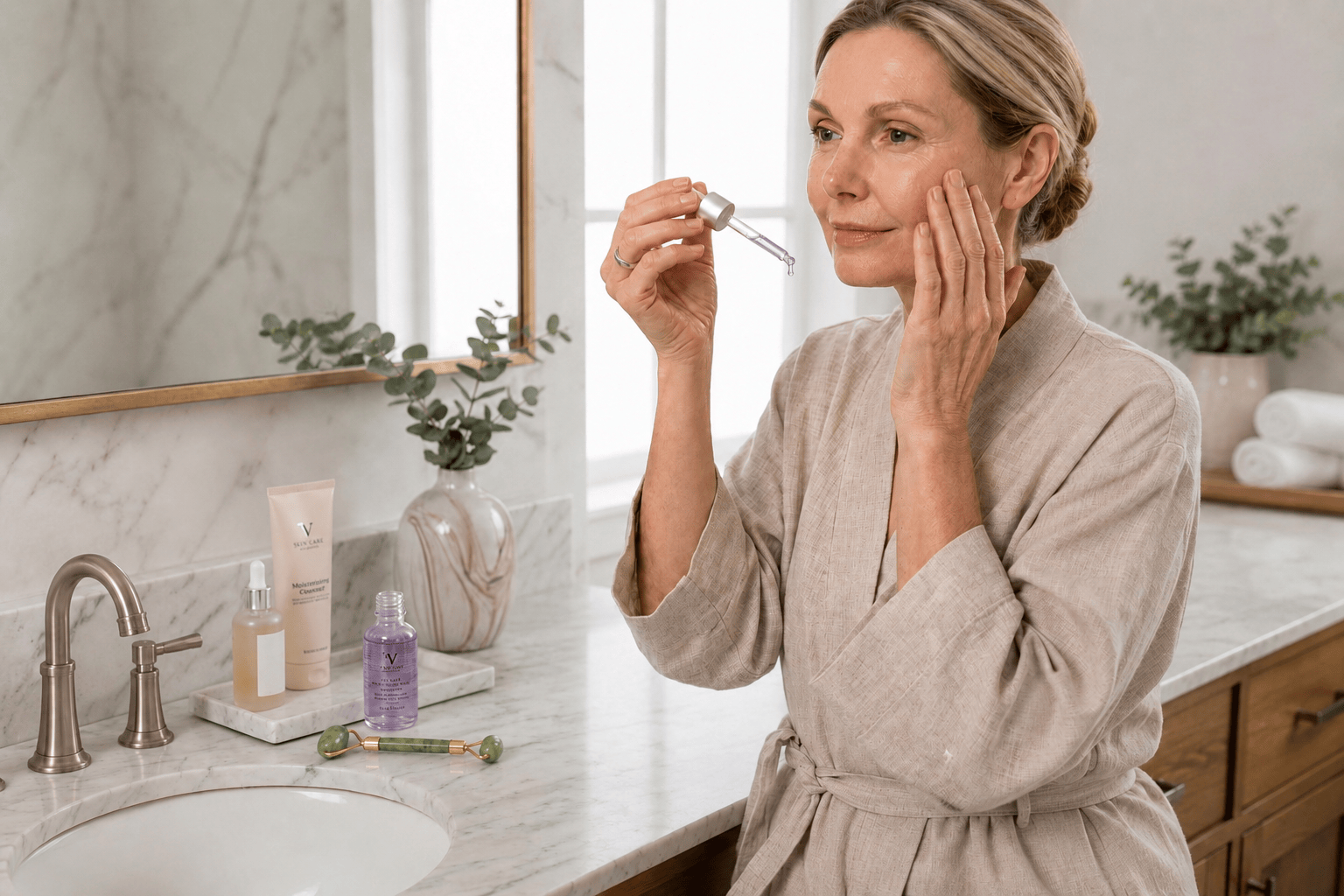
Retinol is one of the most thoroughly researched and dermatologist-recommended skincare ingredients on the planet, and if you’re serious about addressing fine lines, uneven skin tone, or dull texture, it delivers results that few other ingredients can achieve. However, despite its stellar reputation, many women either avoid retinol out of fear or use it incorrectly and give up too soon. This guide explains exactly how retinol works, what the science says about its aging benefits, and how to start using it without the irritation that sends so many beginners running.
What Is Retinol and How Does It Work?
Retinol is a form of Vitamin A, a fat-soluble vitamin your body uses to regulate cell growth, immune function, and skin health. When you apply retinol topically, your skin converts it into retinoic acid, the active compound that communicates directly with your skin cells to trigger renewal and repair. This conversion process is what makes retinol effective, and also why results take several weeks to appear rather than overnight.
Once absorbed, retinoic acid increases the rate at which your skin cells turn over. Additionally, it stimulates collagen production deep in the dermis, the structural layer responsible for firmness and elasticity. A landmark study published in the Journal of Investigative Dermatology confirmed that topical retinol significantly increased collagen synthesis and partially reversed cellular signs of aging. As a result, consistent use leads to visibly smoother texture, reduced wrinkles, and a more even skin tone over time.
It’s also worth noting that retinol regulates sebum production, which is why dermatologists recommend it not just for aging concerns but also for acne-prone skin. Because of this dual action, retinol is one of the rare ingredients with a clinical evidence base across multiple skin concerns.
The Science-Backed Benefits of Retinol for Your Skin
The evidence supporting retinol goes well beyond marketing claims. Here is what decades of research actually show.
Reduces fine lines and wrinkles. According to the American Academy of Dermatology, retinoids, the broader Vitamin A family that includes retinol, are among the only topical ingredients with clinical evidence for visibly reducing wrinkles. Studies consistently demonstrate measurable improvements in fine lines after just 12 weeks of consistent use.
Improves skin texture and tone. Retinol accelerates cell turnover, which means dead, dull cells shed faster and fresher cells surface more quickly. As a result, your complexion looks brighter, smoother, and more even. For women dealing with sun damage or hyperpigmentation, this cellular renewal is particularly significant.
Stimulates collagen and elastin. Your body loses approximately 1% of its collagen each year starting in your mid-twenties. Retinol counteracts this by activating fibroblasts, the cells responsible for producing both collagen and elastin. Over time, this translates into firmer, more resilient skin.
Reduces acne and minimizes pores. Because retinol regulates both cell turnover and sebum production, it prevents the buildup of dead cells inside pores. Multiple clinical trials confirm retinol’s effectiveness at reducing both non-inflammatory blackheads and inflammatory acne lesions.
Fades dark spots and hyperpigmentation. By speeding up cell turnover, retinol helps shift pigmented cells to the surface faster, where they eventually shed. Furthermore, it inhibits tyrosinase, the enzyme that drives melanin overproduction, making it a reliable long-term tool for a more uniform complexion.
How to Start a Routine Without Irritation
One of the most common reasons people abandon retinol is starting too aggressively. Redness, peeling, and dryness (what dermatologists call the retinol adjustment period) are entirely avoidable with the right approach.
Start two to three nights per week. Your skin needs time to build tolerance. Beginning with every-other-night use allows your skin barrier to adapt without becoming overwhelmed. After four to six weeks, you can increase frequency based on how your skin responds.
Apply retinol to dry skin. After cleansing, wait 10 to 15 minutes before applying your serum. Applying retinol to damp skin increases absorption rate and, therefore, increases the risk of irritation. This single step makes a meaningful difference in your adjustment experience.
Use a pea-sized amount. More product does not mean faster results. In fact, using too much is the most common beginner mistake. A pea-sized amount covers your entire face with the right concentration, and nothing more is needed.
Follow immediately with moisturizer. Because retinol accelerates cell turnover, skin can become temporarily drier during the first few weeks. However, layering a rich moisturizer right after application locks in hydration and protects your skin barrier. For sensitive skin, the “sandwich method” (moisturizer before retinol, moisturizer after) significantly reduces the adjustment period.
Apply SPF every single morning. Retinol increases your skin’s photosensitivity, which means unprotected UV exposure will cause more damage than usual. Therefore, a broad-spectrum SPF 30 or higher every morning is non-negotiable.
Retinol for Every Skin Type
Not all skin responds to retinol the same way, but the good news is that retinol works across virtually every skin type when introduced correctly.
Dry or sensitive skin: Start with the lowest available concentration (0.025% to 0.1%) and use the sandwich method. Because of this gentler approach, sensitive skin types are able to reap the long-term benefits of retinol without the short-term setbacks. Building slowly is the most effective strategy for lasting results.
Oily or acne-prone skin: Retinol can be genuinely transformative for oily skin, regulating sebum and preventing clogged pores at the same time. You may be able to tolerate a slightly higher starting concentration, but starting gradually is still the wisest approach.
Aging or mature skin: If your primary goal is addressing deep wrinkles, loss of firmness, or visible aging, a consistent long-term retinol routine delivers compounding results. Most women in this category see the most dramatic improvements over a six-to-twelve-month period of regular use.
Combination skin: Begin with every-other-night use and focus application on areas of concern, typically the forehead, around the eyes, and the mouth. Monitor your skin’s response closely before increasing frequency.
Common Retinol Myths — Debunked
Despite retinol’s decades-long clinical track record, several persistent myths prevent women from using it effectively. Here, let’s address the most common ones directly.
Myth: Retinol thins your skin.
This is one of the most widespread misconceptions in skincare. In reality, retinol does the opposite. While it sheds the outermost layer of dead cells (the stratum corneum), it simultaneously thickens the deeper dermis by stimulating collagen production. Therefore, long-term retinol use makes your skin structurally stronger, not thinner or more fragile.
Myth: You can’t use retinol in summer.
This myth stems from the fact that retinol increases photosensitivity. However, as long as you apply a broad-spectrum sunscreen every morning, you can safely use retinol year-round. The important point is consistent sun protection, not seasonal avoidance of one of the most effective ingredients available to you.
Myth: If you don’t see results quickly, it isn’t working.
In fact, meaningful results from retinol typically require 8 to 12 weeks of consistent use. That said, many users notice smoother texture and a brighter glow within the first four weeks. Patience and consistency are the two most important ingredients in any retinol routine.
The Right Retinol for Your Routine
When choosing a retinol product, formulation matters just as much as concentration. A well-formulated serum needs a stable delivery system that protects retinol from oxidation, because retinol is notoriously sensitive to light and air exposure. Additionally, the best formulas include supporting ingredients that hydrate and buffer the skin during the adjustment period.
The Retinol Serum for Skin Rejuvenation by Vital Skin London is specifically designed for consistent, comfortable use. It delivers a clinically effective concentration of retinol in a lightweight, skin-compatible formula that absorbs quickly, layers easily under moisturizer, and builds tolerance at a comfortable pace. Whether you’re completely new to retinol or looking to upgrade your current routine, it’s formulated to help your skin adjust without sacrificing results. Click Here to view a curated for you Retinol Serum for Skin Rejuvenation.
For best results, use it three to five nights per week once your skin has fully adjusted, typically after six to eight weeks of gradual introduction.
Frequently Asked Questions About Retinol
Can I use retinol every night?
Once your skin has fully adjusted, typically after six to eight weeks of gradual use, nightly retinol is safe for most skin types. However, if you experience persistent dryness or sensitivity, every-other-night use delivers equally strong long-term results. The key is consistency over frequency.
How long does it take to see results?
Most people notice improvements in skin texture and radiance within four to six weeks. More significant changes, including reduced fine lines, improved skin tone, and firmer texture, become visible after 8 to 12 weeks of consistent use. Collagen-building benefits continue to compound over months and years of regular application.
Can I use retinol with vitamin C?
Yes, but timing matters. Vitamin C is most effective in the morning at a lower pH, while retinol works best at night. Using them at different times allows each ingredient to perform at its optimal pH without interference or potential irritation. [INTERNAL LINK: related post — “Vitamin C: How It Brightens Skin and Builds Collagen”]
Is retinol safe during pregnancy?
No. All retinoids, including over-the-counter retinol, are contraindicated during pregnancy and breastfeeding. If you are pregnant or planning to become pregnant, discontinue use and speak with your healthcare provider. Bakuchiol, a plant-derived alternative, is often recommended as a gentler substitute during this period.
What concentration should beginners start with?
Beginners should start between 0.025% and 0.1%. This range is effective enough to produce real results while being gentle enough to minimize the risk of the adjustment period. After four to six weeks of tolerance-building, you can increase gradually based on your skin’s response.
Does retinol cause purging?
Yes, some people experience an initial breakout when first starting retinol. This is called skin purging. It happens because it accelerates cell turnover, which can bring existing clogged pores below the surface up faster than normal. Purging typically resolves within four to six weeks and is most common in acne-prone skin. It differs from a true reaction, which tends to occur in areas not normally prone to breakouts.
Does retinol help with dark spots?
Yes. Retinol fades hyperpigmentation through two mechanisms: it speeds up cell turnover (shedding pigmented cells faster) and inhibits tyrosinase (the enzyme responsible for melanin overproduction). For best results on dark spots, pair with daily broad-spectrum sunscreen to prevent new pigmentation from forming in the first place.
The Bottom Line
Retinol is the most evidence-backed anti-aging ingredient available without a prescription, and it works across virtually every skin concern, from fine lines and wrinkles to uneven tone, enlarged pores, and acne. The key to success isn’t the strongest formula; it’s starting gently, staying consistent, and protecting your skin with SPF every morning.
If you’re ready to add retinol to your routine, choose a well-formulated serum that balances clinical efficacy with skin-compatible ingredients. Your skin will reward your consistency in 12 weeks and for years to come.
Sources
- Retinoids in the Treatment of Skin Aging — NIH/PubMed
- Retinoids: Active Molecules Influencing Skin Structure Formation — PMC
- Cosmetic Ingredient Review: Retinol Safety Assessment — CIR
- Anti-Aging Skin Care — American Academy of Dermatology
- Wrinkles: Diagnosis and Treatment — Mayo Clinic
- Retinol: A Beginner’s Guide — WebMD